






Like the famous tailors of Hong Kong and London, our wealth management service is made to measure. Property, education, retirement or business expansion. No matter what your personal or business ambitions may be, we’ll explore all possible options to create a perfect tailored financial plan.
We are a wealth management and private finance firm created to deal with the desires and ambitions of individuals, businesses and families. Established in Hong Kong in 1966 we have remained privately owned and entirely independent for more than 50 years. That independence allows us to offer clients impartial advice and total transparency. It allows us to build the prefect plan for every individual without bias or agenda. Put simply, our only obligation is you.
SOME OF OUR TRUSTED PARTNERS
SERVICES
HOW DOES OUR SERVICE FEEL DIFFERENT?
28 05 2020
Advice that Matters – Managing Your Finances

Managing your finances alone can be challenging. Discover how a consultant will work with you to create a wealth plan that helps you achieve your goals.
Every individual has goals, and many are related to personal finances from paying for college to meeting health-care requirements and unexpected expenses until we retire. Trying to make financial decisions while managing all these goals on your own can be challenging and time-consuming.
Making important investment decisions about finances requires attention to detail and accuracy. Investing to achieve a meaningful goal is, therefore, more challenging. Developing a well-thought-out plan that focuses on outcomes rather than the fees involved and the current performances alone can be time-consuming, and difficult to understand.
Advisors Focus on More
Financial advisors focus on more than just asset allocation. Relationships are built on knowledge and trust which are important aspects of successfully managing portfolios. Advisors can support individuals, providing advice around tax planning, estate planning, insurance planning, and more. Investors who approach advisors for support often achieve greater outcomes than trying to invest in their knowledge.
Although technology has an increasingly important role in investing today, we are still social beings and rely on other humans to navigate us through some of life’s critical moments. Advisors bring something to the table that technology simply can’t: kindness, empathy, and the ability to handle challenging circumstances to give clients peace of mind.
Working with Your Financial Advisor
Googling about financial advice can only lead you so far. Working with your financial advisor can take you further. Since there are thousands of resources and no shortage of information, it’s easier to come across conflicting points of view.
A financial advisor can help make certain the right choices are being made to suit your financial goals, such as deciding which type of registered plan is best. For example, a tax-free savings account, an education savings plan, or a retirement savings plan. As you become more comfortable with investing, your advisor can help you determine which investments can be put into those plans as well.

Every Situation is Unique
Whether you are at the beginning of your financial journey or transitioning in your life – either through marriage or retirement, your advisor can provide the best solution for your specific scenario. A Google search bar can answer all your questions, but a financial advisor provides a detailed, step-by-step plan that can be adapted to each stage in your life. In addition to providing solutions, an advisor can also provide the background behind such decisions to help you better understand why this could be a good idea, and what it means behind your portfolio.
Accountability and Transparency
Your financial planner gets to know your unique goals and informs you of what it would take to achieve those goals. If the markets move or you feel the need to adjust your finances, knowing you can rely on a financial planner for guidance until you make any commitments will guarantee that you don’t shift from your plan.
READ MORE
27 05 2020
How to Tackle Market Volatility

Keep a cool head as uncertainty strikes, and consider taking advantage of potential opportunities.
Periods of market volatility may cause investors emotional responses. When the markets are as volatile as we have seen lately, it can be natural to feel some anxiety. That is why you and your financial partner have spent time designing a tailor-made financial plan. So that you can prepare for these dips, bounces and recoveries, all whilst still making progress towards your long-term financial goals.
Throughout times of uncertainty, the aim is to maintain focus on those goals. But as you begin planning for market volatility or adjustment, trust your adviser in the planning process revisiting your goals and investments.
The Long-Term Goal
While it may seem unreasonable, part of the approach is to pay less attention to the economy. This is the time to spend more attention to your long-term financial goals. We realize it’s our patterns of behaviour to what the markets do that usually cause the most trouble. For example, stock investors who have actually stayed invested since 2007 and 2013 have almost certainly done well than those who have attempted to try a very volatile market time. Even in an exceptionally-connected age it is complicated.
Consider Your Investments
Now seems to be a reasonable time to review your current investments and evaluate whether they are all still suitable for you. Evaluate your investments as a whole to assess whether you are appropriately diversified – in terms of long versus short-term investments, and domestic versus abroad. Consider the current market with your advisor in which volatility is expected to continue and uncertainty regarding the interest rates.
Re-evaluating Your Risk-Appetite

An important part of ensuring you reach your goals always means understanding your level of comfort with market fluctuations. Understanding your risk appetite can provide important perspective for the development of an individual investment strategy. A strategy is designed to help you see the unavoidable ups and downs of the markets.
Your investment portfolio is created to help you meet your financial goals. It is not something you place and forget. It should be constantly reviewed to ensure that it represents shifts in market conditions as well as in your personal life. You also need to regularly monitor the structure to determine the probability of achieving the goals you have set. Even when your investments are on track, or if not, you and your advisor may need to make some changes. As a result, either to your goals or to the investment plan itself.
The Silver Lining

Although declines in the sector are fairly common, the rises have continued to respond traditionally. But to reap from those potential gains, you need to engage, not withdraw. As some of the best days came right after times of steep decline, investors who wanted to pull their money out of equities during those down periods may have avoided some of the biggest gains on the markets. Note also that a fall can present opportunities to purchase quality assets when potentially undervalued. This could encourage you to invest at lower prices in high-quality companies and reap added value.
We are presented with a true testimony to durability when looking at the economy over a fairly long period of time. We learn a lesson in patience, flexibility and commitment by monitoring the overall growth that the market has accomplished.
There is no assurance any investment strategy will be successful. Investing involves risk including the possible loss of capital. Past performance may not be indicative of future results. International investing involves additional risks such as currency fluctuations, differing financial accounting standards, and possible political and economic instability.
27 05 2020
Timing Investments: When vs. How Long
Timing is a very important aspect; in some matters it is everything. But in investing, timing should be accompanied with patience, consistency and a little bit of trust in the market.
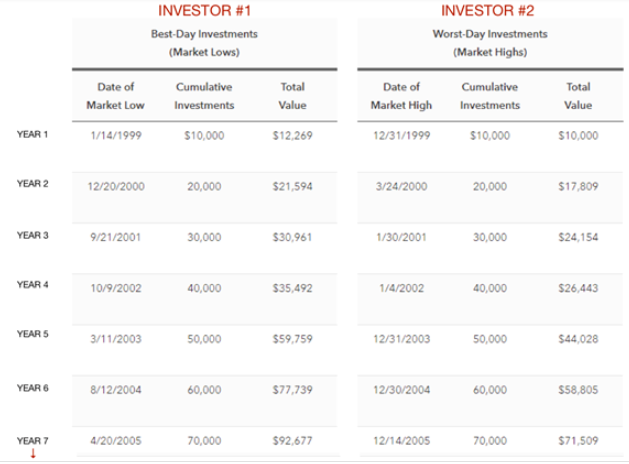
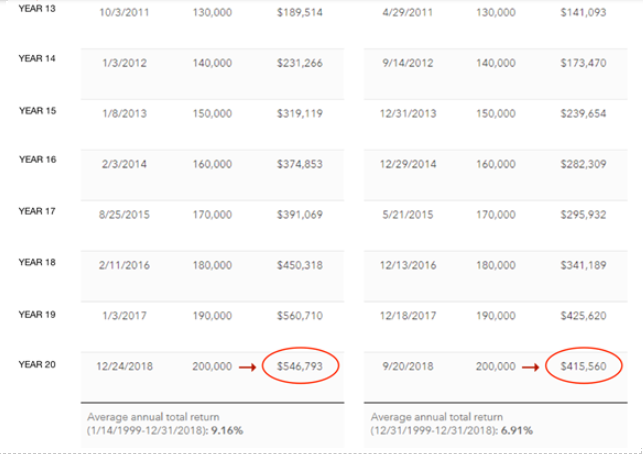
To further highlight what we are talking about, take a look at the story of these 2 investors who each contribute $10,000 per year.
Investing for Twenty Years or More
Now let us look at the potential portfolios of the two investors who continuously invest for 20 years in the S&P 500:
Proportion of Losses
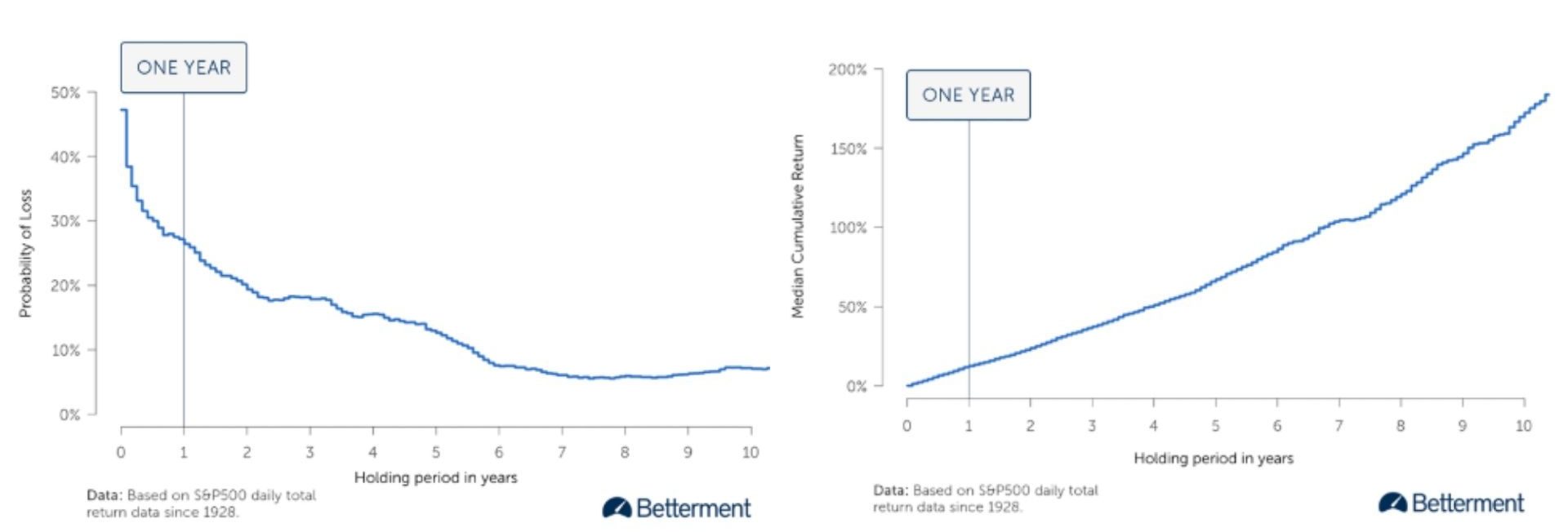
Within one year, the proportion of losses decreases significantly.
This is one important aspect of the time-in-the-market guidance! The chance of loss is far greater for short-term investors than long-term investors while they are trading in the S&P 500. It is vital to remember that regular investment neither guarantees a return or protects against a loss, however, data suggests that investing long-term presents a more promising result.
Money Grows During Market Highs and Market Lows
Investors prefer to get in at the lows and profit off at the highs. Everyone would want to escape falls. Sometimes this fear that holds investors on the sidelines saves them the suffering, but it also means they miss the reward.
The two investors in our story overcame that fear and stepped out of the sidelines. In turn, both of them got their rewards and they collected their money’s earnings.
Timing and Patience
In the midst of the COVID–19 pandemic, we need to remember that historically, rising depression has been accompanied by the subsequent upswing. There is no certainty it will always happen, but as we said: to be victorious in the world of investment, timing, patience and a little bit of the trust in the market is needed.
READ MORE
20 02 2020
Ho Chi Minh City – Business Development Manager
COMPANY OVERVIEW
Winson Capital is one of Asia’s most prestigious Expatriate Financial Advisories. Established in 1966, the company has been helping internationals manage their finances on a global scale. We are a wealth management and private finance firm created to deal with the desires and ambitions of individuals, businesses and families.
JOB DESCRIPTION
Job Summary
Our company strives to maintain a highly motivated team that enjoys being part of our business and providing the best customer service. With you on our side as an enthusiastic, personable and organized business development manager, we will easily achieve this goal. You will work closely with our financial consultants in order to help build their client base and revenue stream, being part of the growth. The business development manager will be responsible for coordinating the meetings and deals for financial consultants in various areas across a wide range of investment products. If you enjoy working in a fast paced dynamic environment and are a highly self-motivated individual seeking growth in your career, we want to hear from you!
Job Responsibilities
- Contact potential customers to introduce Winson Capital and create an appointment financial consultants, including senior financial managers
- Answer questions about products or the company
- Ask questions to understand customer requirements
- Direct prospects to the field sales team when needed
- Enter and update customer information in the database
- Take and process information in an accurate manner
- Go the “extra mile” to meet sales quota and facilitate future sales
- Keep records of calls and sales and note useful information
Job Skills & Qualifications
Required
- 0-2+ years’ experience as a business manager
- Bachelor’s degree or higher
- Strong written and verbal communication skills
- Proficiency in Microsoft Office Suite, especially Excel
- Proven experience as telesales representative
- Good knowledge of relevant computer programs (e.g. CRM software) and telephone systems
- Ability to learn about products and services and describe/explain them to prospects
- Excellent interpersonal skills
- Cool-tempered and able to handle rejection
- Outstanding negotiation skills with the ability to resolve issues and address complaints
Preferred
- Proven track record of successfully meeting sales quota preferably over the phone
- Experience in telesales or customer service role
17 01 2020
The Most Expensive City in Asia
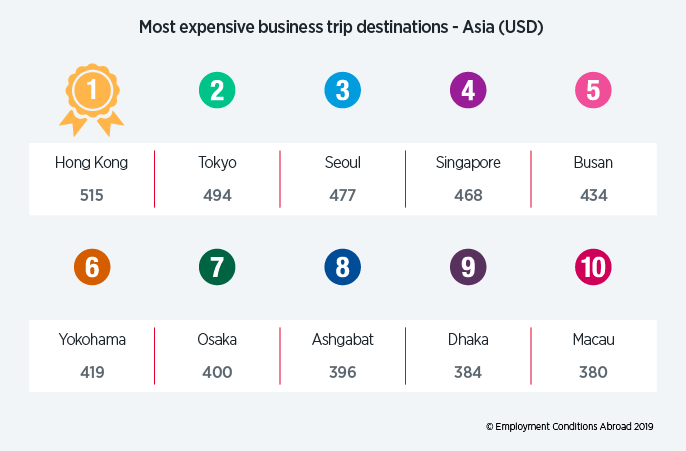
As an expensively exciting city in Asia with cross-cultured dynamics between Western and Asian cultures, Hong Kong is often referred to the city where “East meets West” since the roots of the Chinese culture have been greatly influenced by the British in the past.
Hong Kong is well known for being the “concrete jungle” and is recognized as the global center of trade. The subtropical climate accounts for beach and scenic getaways. In March 2019, BBC News released a list of the world’s most expensive cities, with Hong Kong being listed as #1 in Asia. Above all, Hong Kong is still noted as a vibrant and exciting city for expats and travelers.
Most of the world’s largest or most well-known banks (Citibank, HSBC, Deutsche Bank) have a presence in the city. As one of the world’s leading international financial centers, Hong Kong has a broad capitalist service economy. That is to say, it is marked by low taxation and free trade. The Hong Kong dollar is among the top ten most exchanged currencies in the world.
Living in Hong Kong
Hong Kong has a large population of expats, and the culture of expats appears to be friendly and welcoming. With English being used as one of the main language mediums, expats can easily navigate the city with many signs being posted in Cantonese and English. Most business individuals are able to converse in relatively good English or Cantonese. In addition, having modern, clean and reliable transportation such as trams, taxis and ferries, allow for efficient commutes. For example, taxi journeys for about 5 to 15-minutes cost less than HKD 50 which is equivalent to less than USD 7.
The Working Class – Income and Expenditure
Expat salaries in Hong Kong are subjected to the ‘supply and demand’ which in turn tend to be the higher salaries than most places in the region, but so are the costs of living. Further, a large quantity of the produce is imported. Keeping in mind the possibility of currency fluctuation, daily expenses are quite high. Therefore, expats are known to earn according to the standard, experiencing a much higher quality of life.
Wherever you go, property prices in Hong Kong are always relatively high. Consequently, accomodation costs are higher due to over-inflated markets. For instance, a one-bedroom apartment in the city center costs at least USD 2300. On the other hand, outside the city center can be considered ‘cheaper’ – averaging at a cost of USD 1500. The 2019 HSBC Expat Explorer Survey ranks Hong Kong as 15, which is two ranks higher since 2018. This concludes the city as relatively higher than Mainland China, which is ranked 26th.
Expat Packages
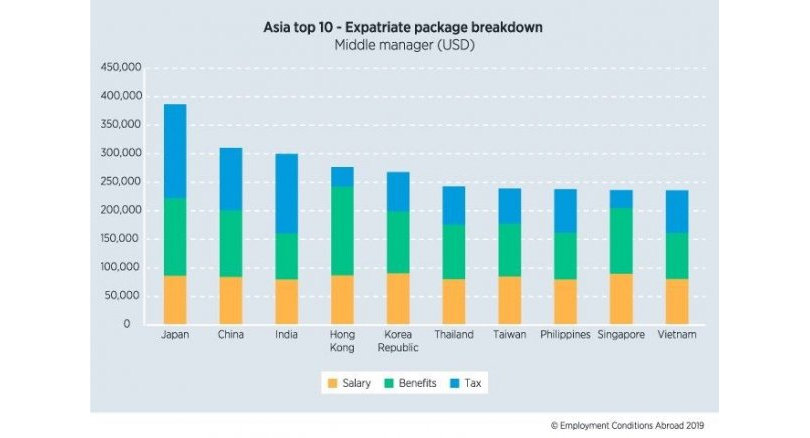
In Hong Kong, mid-level expatriate salary packages continued to rise in 2018, with the median contract costing companies USD 276,417. This came in 2017 after a modest drop.
The benefits offered as part of the pay package for an expat have always been strong in Hong Kong as it tends to be desirable to both enterprises and expats. Such high demand contributes to significantly more expensive housing, foreign education and other expenses than most other places.
Regionally, Japan held top spot with Hong Kong in fourth place quite unexpectedly behind China.
 Saving Money in Hong Kong
After moving to a new country and familiarising yourself with the currency exchange rate, living expenses and monitoring spending habits, the thought of saving could come to mind. This could be saving for a deposit on an apartment back in your home country or a rainy-day fund. Saving a small amount from your salary could help build your nest. This often provides more flexibility and opportunity for the future. With the surplus in expat salaries, the option to save is much easier.
Simple Savings Calculation
For example, your initial investment could be USD 10, 000. You then contribute USD 500 monthly, at the end of the period. Saving for a period of 10 years compounded annually at 1.25% could accumulate a future value of USD 75,175.64.
Calculate your savings/investment!
At Winson Capital, we provide guided knowledge and consultation through an evaluation process to provide a plan to suit every individuals needs ensuring you reach your goal.
25 11 2019
Life Expectancy Calculator
Calculate your life expectancy using the calculator below:
- Enter your age
- Select Male or Female
- Click Calculate
- View results
Source: https://www.ons.gov.uk
Interested in financial planning? Contact a Winson Capital representative today!
READ MORE
21 11 2019
Expats Living and Working in Vietnam

When moving overseas, expats are looking for the perfect work-life balance. They seek job security, a good wage, and unique opportunities to experience a culture that is different from their own. Living in Vietnam can provide an authentic taste of life in the East.
As an attractive tourist destination, it is becoming increasingly popular for foreigners. Expats are drawn by the pleasant weather, low living costs, intercultural experience, as well as its beautiful beaches which have become more famous. For example, Da Nang Beach has been voted as one of the top ten beaches in the world by Forbes magazine many times.
Finance and work abroad in Vietnam places first in both indices. This means, together with the improved quality of life ratings and ease of settling in, according to HSBC expat survey report in 2019, Vietnam ranks at 10 in comparison to Mainland China which ranks at 26.
Vietnam Cost of Living

Vietnam has a relatively low cost of living and with moderate spending, expatriates can live a very comfortable life here. In the 2019 Mercer Cost of Living Study, at 120 in the list of the world’s most expensive cities, Ho Chi Minh City moved up 4 from 124 since last year. Different residences are accessible to fit all budgets, varying from upmarket Villas to studios in major cities to small suburban houses. Expatriates note a big difference between local food and western food rates in Vietnam, and those who are willing to eat at local bars and restaurants can notice that they can eat good food at a very low price. For instance, if you look at costs in U.S. Dollars, a beer could be as little as 76 cents, a meal at an inexpensive restaurant under $3, and monthly rent in a City Center 1-bedroom apartment for around $470!
Expat Job and Career Opportunities
Clearly, Asia’s role in the world economy is increasing; and the ongoing economic boom in Vietnam has led to millions of new jobs being created. The job opportunities in Vietnam are very abundant when many parts of the world face unemployment, particularly for foreigners.
If you want to receive a six-figure salary, travel to Asia, according to the seventh version of the HSBC Expat Explorer study! In Vietnam, 15% of expats receive more than $250,000, compared with the global average of 7%. However, 75% of Vietnamese expats claim they are happy with the relatively higher rates of disposable income. Clearly, a better pay makes your job more appealing!
Why Foreign Investment in Vietnam is Booming

In Vietnam’s international economic affairs, attracting foreign direct investment (FDI) has always been a key part. Vietnam already has many comparative advantages and a strong investment environment but are working hard to make foreign investment even more appealing. Also, Vietnam has benefited from the trade war between China and the USA with a lot of companies moving here due to this. The housing market is also booming with new build luxury apartment complexes popping up throughout the major cities and many expats are looking to buy here after the changes in the law allowing expats to purchase apartments with a 50-year lease.
The Benefits of Investing
As an expat in a foreign country it can be difficult to find financial services or financial aid for higher education costs, savings and retirement planning. 15% of expats in Vietnam earn over $250,000 which leaves them with a surplus in savings. Of course, you might lead a more comfortable lifestyle for much less if your costs are a lot lower. This is when the thought of retiring abroad is considered. However, retirement is the long-term investment target which typically gets the most attention. and for good reason.
When it comes to retirement planning, time is the strongest asset you have. As a wealth management and private finance firm, Winson Capital provides expats the opportunity to invest abroad via international investment platforms and solutions combined with ongoing support and advice from professional financial advisors.

15 11 2019
Market Outlook – November 2019

With the Fed’s likely pause in monetary action, markets are approaching the end of 2019. Under these circumstances, close scrutiny of investment portfolios remains prudent for the potential for structurally “superior growth.”
US economy immune to the trade war?
The US and China negotiating teams are still searching for a trade standoff compromise. Meanwhile, more evidence has emerged that the conflict is affecting the US economy, although the consequences can still be described as a “dent” in the growth pattern in the US, rather than forecasting a major recession.
The report on jobs in October exceeded predictions, adding 128,000 jobs, with unemployment hovering around its historic low of 50 years. President Donald Trump said the US was “before the deadline” while referring to the talks on the US-China trade deal. The US Federal Reserve lowered the base rate as anticipated by 25 basis points, while forward-looking guidance prompted economists to lower their expectations for future rate cuts.
Europe
The European Central Bank held rates at its historic low, with outgoing President Mario Draghi saying that governments in the Eurozone now need to focus more on economic growth fiscal policy.
In the Eurozone, trust indicators were far weaker than expected.
However, stocks rose to a total of 22-month high as the EU granted a further extension to the UK’s Brexit leave date, together with strong capital inflows into the country.
UK
- A application from the UK was approved for a three-month delay to Brexit.
- MPs have now agreed on a December 12th general election.
- UK equity dropped by 0.4 percent over the week, with global equity underperforming.
- UK gilts yielded negative returns at -0.2 percent over the week, with flat equivalents of their investment grade.
Rest of The World/Asia
- The Bank of Japan has kept its policy rate the same, but has reiterated its forward guidance, saying that it expects short and long-term rates to remain at or below current levels.
- The Bank of Canada also held rates at 1.75 percent, which economists interpreted as dovish.
- China’s October PMI for manufacturing reported 49.3 (compared to planned 49.8), the lowest reading since February and the non-manufacturing PMI was below anticipated at 52.8 (compared to 53.6)
Policy Divergence Between the Fed and ECB
The Federal Open Market Committee (FOMC) lowered its benchmark funds rate by 25 basis points to a range of 1.5% to 1.75% in a move widely expected by financial markets.
Prolonged Wait for a German Turn-Around
The GfK consumer sentiment index for Germany dropped from 9.8 in October (the lowest since November 2016) to 9.6 going into November.
Market Overview
- The Federal Reserve has cut rates in four months for the third time
- During the week, flows into European stocks outperformed those of US stocks
- Brent crude fell 0.5 percent to $61.7 a barrel as stocks at the largest storage hub in the US rose by 1.22 m.
- Gold rose 0.4% to $1509.2 an ounce
Contact Winson Capital to find out more about exciting investment opportunities via Goldman Sachs
READ MORE
10 10 2019
How Often Should You Review Your Financial Plan?
Caring about your health is very much like caring for your financial plan. Quite like your annual checkup recommended by your doctor, your trusted financial adviser recommends an annual assessment of your financial plan.
Think of your financial plan as your road-map, needing to constantly refer to it to stay on track in order to achieve your financial goals. Your financial plan needs to be planned according to current standards of living, considering your assets and liabilities. Therefore, a yearly review is essential to assess your progress made towards achieving your financial goals.
Here are a few milestones that make a financial review necessary:
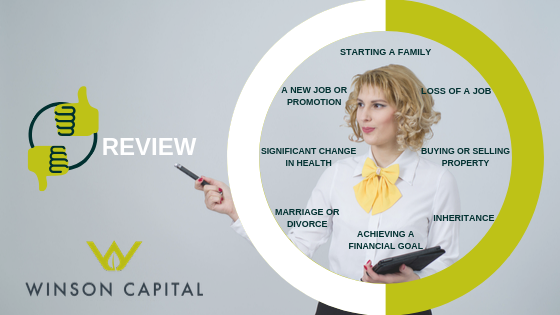
- Starting a family
- A new job or promotion
- Loss of a job
- Buying or selling a property
- A significant change in health status
- Death inheritance
- Getting married/separated/divorced
- Achieving a financial goal such as paying off debt or acquiring a new asset
What to Consider When Reviewing Your Financial Plan
Standard of living
Your standard of living will have a direct effect on current expenses and savings. This determines how you will achieve your financial goals beyond your years of earning.
In order to maintain a certain standard of living, it is important to ensure that your standards remain constant with the income being earned for an individual to live the same way during the golden years, better known as retirement.
Goals
Your priorities will likely change over time. For example, being in your early 20’s, your priorities may include going on vacation and spending on your lifestyle. However, these spending habits may change should you and your partner decide to start a family.
A good financial plan includes long-term and short-term goals. A long-term goal could be planning for retirement, whereas a short-term goal could be saving towards a mortgage bond.
It is also important to have an emergency fund for a rainy day or unexpected expenses incurred, such as falling ill and needing to see a doctor or being hospitalized.
Income and expenses
Having a complete understanding of your cash flows, that is, where the money is coming from (income) and where it is being expended to (expenses), is important. This will guide you on how long your income (or what is left after expenses) will last for the remainder of the month. Therefore, being able to differentiate between one-time, temporary and recurring income can help prepare a budget based on your past finances, giving you a clearer picture of what you could potentially save.
If your income consistently exceeds your expenses, this means it’s time to revisit the plan. However, it is also important to consider inflation during any financial plan.
Change in Risk Appetite (Level)
Risk Appetite frames your financial plan, therefore a change in risk can have either a positive or negative effect on meeting your goals. For example, a young investor would be willing to take more risk, but as you reach retirement years, your risk level might be lower.
An annual or bi-annual review increases the possibility of fulfilling your financial goals, by incorporating personal or economic changes in your plan.
The Importance of a Financial Review
There could be a possibility a fund you’re invested in isn’t performing well. This is the importance of a financial review; it allows your financial adviser to analyse your investments and determine if they are worth keeping and suitable to your current financial evaluation.
Contact your trusted adviser to schedule your annual quarterly review.
READ MORE
03 09 2019
Smart Investing: A Beginner’s Guide
Imagine life without being able to do the things you want. Sure, not everything you want to do during your lifetime will cost money, but it certainly helps provide opportunities. To ensure you have money in retirement, it’s important to save wisely and make it work for you through sensible investing.
Let’s assume you have a 9-5 job that pays the bills. You’re committed to your job and through hard work, you are rewarded with a raise or promotion which increases your income. You begin to plan your future deciding you want children, and possibly you can afford a vacation at least once a year. You have a nice car and have a beautiful home to show. Things are going great, but what impact would it have on you and your family if this all stopped and you had no money? What will life look like in retirement if you spend all your income now and when that income stops, your lifestyle changes dramatically because you haven’t prepared or invested?
Investing is a smart idea.
Knowing the best way to save and increase your wealth can be difficult and confusing. There are many options available to you but gaining access to them and understanding what’s right for you, could mean you need professional help. The first step is to analyse your current position. We recommend reducing high-interest debt and ensure you have savings for emergencies. Once you have done this, then work out how much you can afford to invest from your savings or on a regular basis from your income. Once you know this, you’re ready to begin investing.
Investing 101 and Why It’s Important
As we get older, opportunities for work reduce and eventually, we retire. It’s then when you need to rely on social security/state pensions and/or your own retirement savings. You may have been sensible and saved for retirement using your bank account, but saving isn’t enough to build wealth if you consider inflation reducing the value of your savings each year by up to as much as 3% in some countries.
Investing is as simple as purchasing something now hoping that it will increase in value creating profit in the future. Traditional investments include investing in real estate, bonds, stock or shares. In the simplest terms, when you invest, your money is working to earn you more money. Long term, investing allows your assets to grow above the rate of inflation.
The Benefits of Starting Young
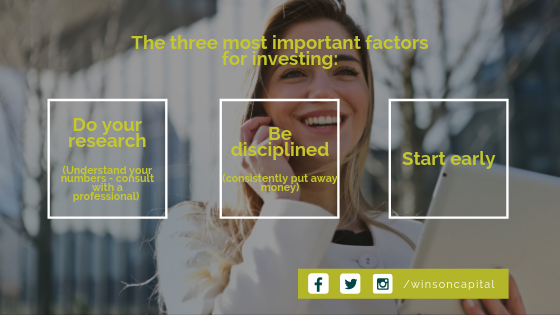
When should you start saving for your future? The answer to this is exceedingly simple – as soon as reasonably possible. We should all start saving for our future when we first start working, but the reality is, most people don’t and if you haven’t started already, today is a great choice.
As soon as you have a stable financial income, you should consider taking steps to invest. This will include having no high-interest debt, an emergency fund, and a long-term goal for your investments.
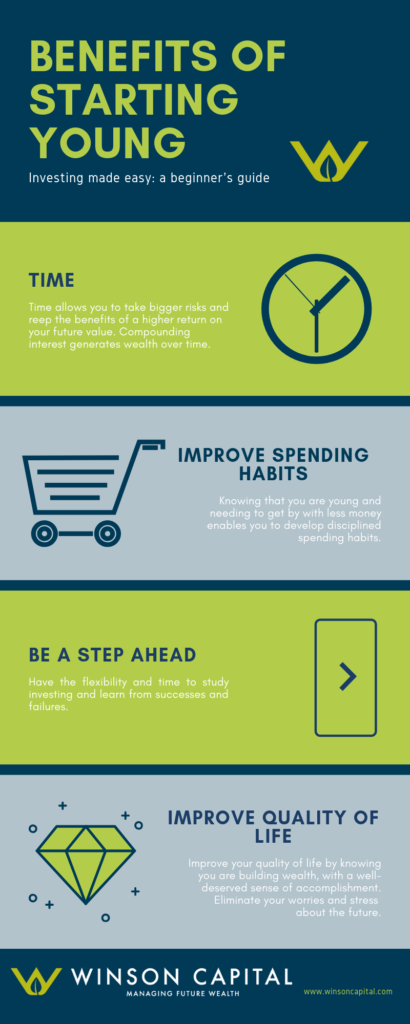
Time is your most powerful tool when investing. Compound growth and dollar cost averaging requires time and consistency. Therefore, the earlier you start and the more often you save, the more wealth you could create with less money.
Here is an example:
If you save $1400 a month for 26 years, compounded annually at 10% – this will generate your net worth into $2,017,670 in 26 years.
This sum of money at your retirement, with a 3% yield on dividends, can conservatively collect yourself $60,530 a year to live on without reducing your saved amount.
Of course, there are various factors to consider before investing a large sum of money.
Risk
Investing intrinsically carries risk. Deciding whether you’re investing for retirement or another financial goal will help to determine what level of risk is appropriate for you. For example, if you’re investing long term for retirement, you may wish to accept a more aggressive portfolio during the early years and reduce the risk closer to retirement or the end of the plan to preserve the wealth you have created within your portfolio.
The Importance of Starting
The most important aspect to saving for any financial goal is just getting started. Once you’ve started saving, ensure you are saving on a regular basis. Haphazard saving can reduce your chances of reaching your goals, having a savings vehicle that automatically withdraws money from your bank account and invests it for you helps to save in a disciplined manner.
To find out if you are in a position to invest or for more information click here
READ MORE
25 07 2019
Global Health Care Announce Collaborative Partnership

Winson Capital is pleased to announce a collaborative partnership with Global HealthCare (GHC). Therefore, we will produce a series of seminars focusing on health awareness in Asia. By harmonizing life insurance and wealth management planning, we will be able to exchange insights between well-being concerns and safety. So forth, both companies will offer real-world condition advice ensuring a prosperous future for individuals and families.
Above all, there are many topics of interest to our clients and the expat community. We believe these seminars can focus on addressing questions on immigration or working and living in Asia, as a result assisting with investing abroad.
About Global HealthCare (GHC)
Global HealthCare is an established, premier foreign-owned healthcare company in China. As a result of their range of medical services and specialists, GHC is listed on the medical panel of many insurance providers. Therefore, GHC is able to offer hassle free billing for their patients. In addition, GHC has a team of highly experienced multi-disciplinary and multi-national doctors from UK, Hong Kong, and China.
For more information about Global HealthCare please click here.
To provide the strategic exhilaration of the partnership between Global HealthCare and Winson Capital, the following statement had been made by the Director himself:
“We are thrilled to be able to partner with GHC, who are one of the leading health care providers in Asia. Through this partnership, we will be able to offer our clients high quality healthcare. Thereby, enriching our clients’ experience with Winson Capital through Asia’s leading medical practitioners,” said David Reed, Director of Winson Capital.
To stay informed of upcoming seminars and events, connect with a Winson Capital representative or long press the QR code to subscribe to our WeChat.

Winson Capital helps you plan and manage your finances.
Global HealthCare helps you fulfill your plan.
READ MORE
23 07 2019
Client Testimonials
Meeting our clients expectations is a core value, hence understanding their goals is an important aspect. At Winson Capital we strive to provide attentive services to best suit our clients needs and expectations, as a result planting the seeds for a brighter future.
READ MORE
28 06 2019
5 Non-Fictional Ways to Get Rich
Most people have given it a thought. Who is your millionaire idol? Can you imagine having their lifestyle?
Unless you win the lottery or be next in line for the family inheritance, it’s easy to believe it’s impossible to get rich. Becoming a millionaire is easier than you think for those who start young by developing the right monetary habits. Envision yourself as a millionaire and think of all that you could accomplish.
People offer ideas on how to become rich; these ideas are proposed on cutting expenses. Saving is unattainable without having an income. It’s a matter of choices. Take a daily cup of coffee as an example:
Spending $5 on a cup of coffee every day from your favorite coffee shop adds up to $150 a month, $1800 a year and for the next 5 years nearly $10,000. That’s a substantial amount. However, is it considered saving by curbing a cup of coffee? Spending less than your income is ideal, but a family of four with an average of $50,000 a year would certainly require more. So how much do you truly have left over?
These top-five tips can help you reach your riches realistically:
1. Work Smart and Invest in Yourself

Investing in yourself means that you’re aiming to achieve greatness – this could be developing your skills or achieving a career goal. Ultimately, this should position yourself to be able to help another individual in need. Successful growth is measured by investing in time, energy, and money to improve on what you’re good at already. If not monetary investments, this is where you can begin.
2. The Right Job Serves the Income

Chip Somodevilla/Getty Images
Finding a job sounds like the best solution, but what does it take to get the ‘right job’? Of course, you know that you need a job, but having a course of action will provide you with a commission-based income – this is how you can control how much you earn rather than just a salary.
3. Skills Are Valuable. Build Them
Skills are valuable. Being good at what you do is easy as average for bottom performers, but getting great at what you do can be successfully rewarding. Being obesessed with your profession will only lead to increasingly valuable skills.
“The only difference between
a rich person and a poor person
is how they use their time.” – Robert Kiyosaki
4. Save and Invest
Getting in the habit of saving should end any financial plan with a systematic investment. Try saving $100,000 as a result of proving that you’re cable of contriving money and preserving it – this is what people lack the ability to do. By saving, you can start building wealth. Be sure to investigate savings options to ensure you’re getting the best return. Diversification of savings is the most important key; it takes money to make money.
5. Multiple Streams of Income
It’s only a dream of getting rich without multiple streams of income. If you have a set salary already, start increasing it by adding multiple flows. People go from one flow to another resulting in different flows that don’t have any connection. These flows, however, should always be connected. For example, if your expertise lies in advertising, prove yourself, then make advertisements for your employers’ network.
Professional advice from a financial expert can help build or maintain an investment portfolio. The right adviser can tip the scale towards the seven-figure milestone. Manage your wealth with ongoing advisory and support.
READ MORE
13 06 2019
Understanding Your Risk Appetite
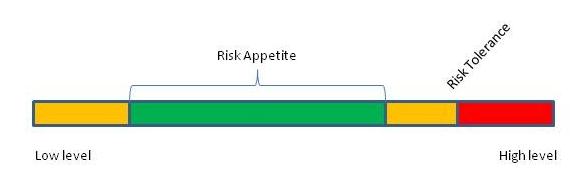
When thinking of investing, people generally want to obtain high returns without thought to the risk level involved in achieving this. Therefore, working out your own risk appetite is one of the first objectives any future investor should do. When thinking about investment risk, you need to consider financial factors such as – inflation, volatility, interest rates, time horizon and investment allocation. As a result, you need to know what your own threshold is before you make investment decisions.
It’s important at this stage to distinguish the difference between risk appetite and risk tolerance. The idea of risk appetite is to establish what amount of risk is acceptable, whilst risk tolerance defines the ability to accept the risk. Therefore, these need to be determined before you invest in order to help dictate the distribution of your capital and assets.
Investing on a Regular Basis
With regards to a regular savings vehicle or pension whereby you invest on a regular basis. As a result, you can discover your tolerance by knowing your income and your expenses. This will tell you how much you can afford to contribute to investments. Creating a cash flow budget is an integral component of investing effectively. Identifying how much you spend in a week, month or year will allow you to see how much you can afford to invest on a regular basis. Maintaining a liquid cash reserve that can support your current lifestyle for the next 6 months is essential. In addition, your financial responsibilities will also play a role in assessing your risk tolerance.
Risk appetite measures the degree of fluctuating value of an investment that an investor will be able to withstand. If you cannot handle large fluctuations in the price of an asset, you might act on impulses. In turn, this affects your judgement as you may see things negatively and wish to stop your losses or take minimal returns.
Continuing the journey of investing, one must consider their goal for the investment. Namely, what is the reason you are investing? Is the investment towards saving to pay for your children’s education planning, retirement, or simply wealth creation?
Considering your Investment Goal
You need to consider your investment goal as it will have a direct impact on the investments consider for your portfolio. For instance, if you are investing in a pension scheme or a savings plan for your retirement, you may consider taking a more cautious approach. You will begin to invest in assets that are less volatile which will likely see less severe fluctuations. Hence, considering the investment time frame is as important. Your risk appetite will undoubtedly change over time. As we get older, we begin to focus more on financial security and so a lower risk profile would be more suitable.
Classifying Risk Appetite
There are three basic classifications for risk appetite – Conservative, Moderate and Aggressive. So, if you wish to invest “Aggressively,” you could achieve high investment returns. However, this is coupled with a high degree of risk. Many casual investors are not as inclined to this level of risk with their own finances. Generally, high-risk investors may invest all their capital into equities and other high-risk assets.
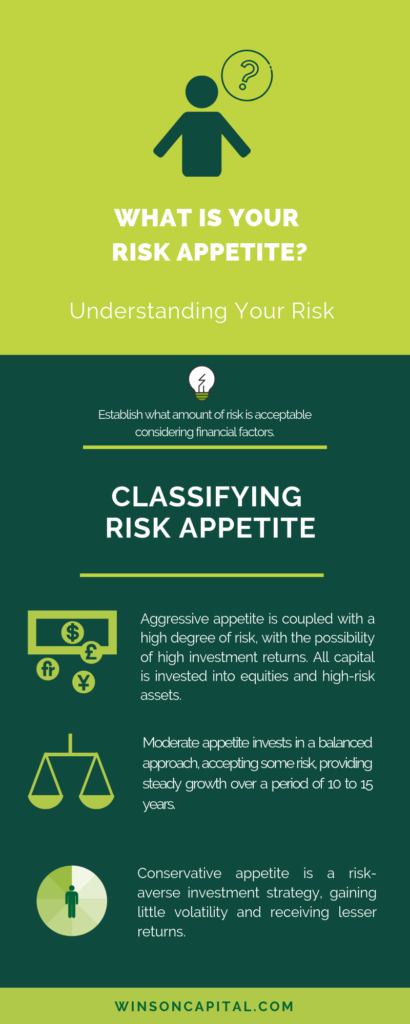
A “Moderate risk” investor means you are taking more of a balanced approach, such as accepting some risk that will hopefully provide steady growth over a period of 10 to 15 years. A “Conservative Risk” investment strategy is more risk-averse, meaning that you will get little volatility on your investments and receive a lesser return.
If you are thinking about investing, there are many factors (including the above) that you should consider. Speaking to a qualified professional can help you to optimise your financial goals and maximise the opportunities that are available to you.
Contributor: Mobine Khaliq
READ MORE
05 06 2019
What is Off-Plan Property Investment?
An off-plan investment is a great and adaptable option for private investors that is becoming popular worldwide. Both the UAE and the UK offer established sectors where private investors can gain high performing, long-term returns. Investing in these sectors does come with some risk.
South Asia, particularly Vietnam, offers substantial opportunities to take advantage of the downturn in the markets in the year 2019.

What is off-plan investment?
An off-plan investment strategy consists of purchasing a property before it has started construction. Once construction is complete, rather than living on the property, the investor will either sell, hold, or rent out the property for supplemental income. Many of these investment opportunities exist. But before an investment is made, a priority for the investor should be to clarify with an independent and qualified professional, what risks are involved.
What’s a key advantage of off-plan investment?
One of the major benefits of being in an off-plan investment is you get to decide on how much involvement you will have in the project. If the goal is to buy an off-plan to receive rental income, you don’t have to do all the work yourself. Many companies, such as those who manage the furnishing of the property, and established management companies, can take advantage of buying in bulk. This counts for heavy discounted deals.

Will I need a deposit to kick off my off-plan investment?
Each investment can be different but one of the major advantages of an off-plan investment is the down-payment system. The benefit is that instead of one large deposit, you can do fragmented payments. This plan allows you to pay in regular installments. In the UAE, for example, instead of having to pay the 25% deposit, you can use a down payment plan.
Can I get a mortgage for my off-plan investment?
It is possible to get a mortgage. In the UAE, Rakbank, Noor Bank and UAB all provide mortgages for these types of investments. Due to these investments carrying more risk than traditional mortgages, the investor can expect to pay a higher interest rate than those who purchase traditional mortgages. The rate can vary based on how close the project is to completion and which developer is involved. The closer the project to completion, the less expensive the mortgage is.
What sort of prices am I looking at for off-plan property?
As with most investments, the risk is factored into the price the investor pays. The higher the risk for the buyer, the lower the price will be. An off-plan investment is cheaper than purchasing a traditional property because the construction of the project has yet to begin. Major risks of off-plan investing are: that the project may not even be built, the construction date may be delayed or your expectations for the property are not met. To lower the chances of these risks becoming reality, investors should select known developers with a good reputation. The trade-off is that working with these developers will result in higher prices for the investment.
Can I sell my investment in off-plan property?
You cannot sell the investment until the property has been fully constructed. There is no established market in off-plan investments, which makes this a very illiquid investment.
Is buying off-plan better than buying bricks and mortar?
The benefit of purchasing bricks and mortar is “opportunity cost”. The opportunity cost of an investment is how much your money would have been earning if it had been invested elsewhere. For brick and mortar, there is little to no opportunity cost because the project has already been completed. Generally, the opportunity cost is 5% per annum. With off-plan investments incurring a high opportunity cost, an investor could instead opt to invest their money in a high-interest savings plan.
If you’re interested in knowing more about off-plan investments, contact a Winson Capital representative by completing this form
Contributor: Chris Cagol
READ MORE
02 04 2019
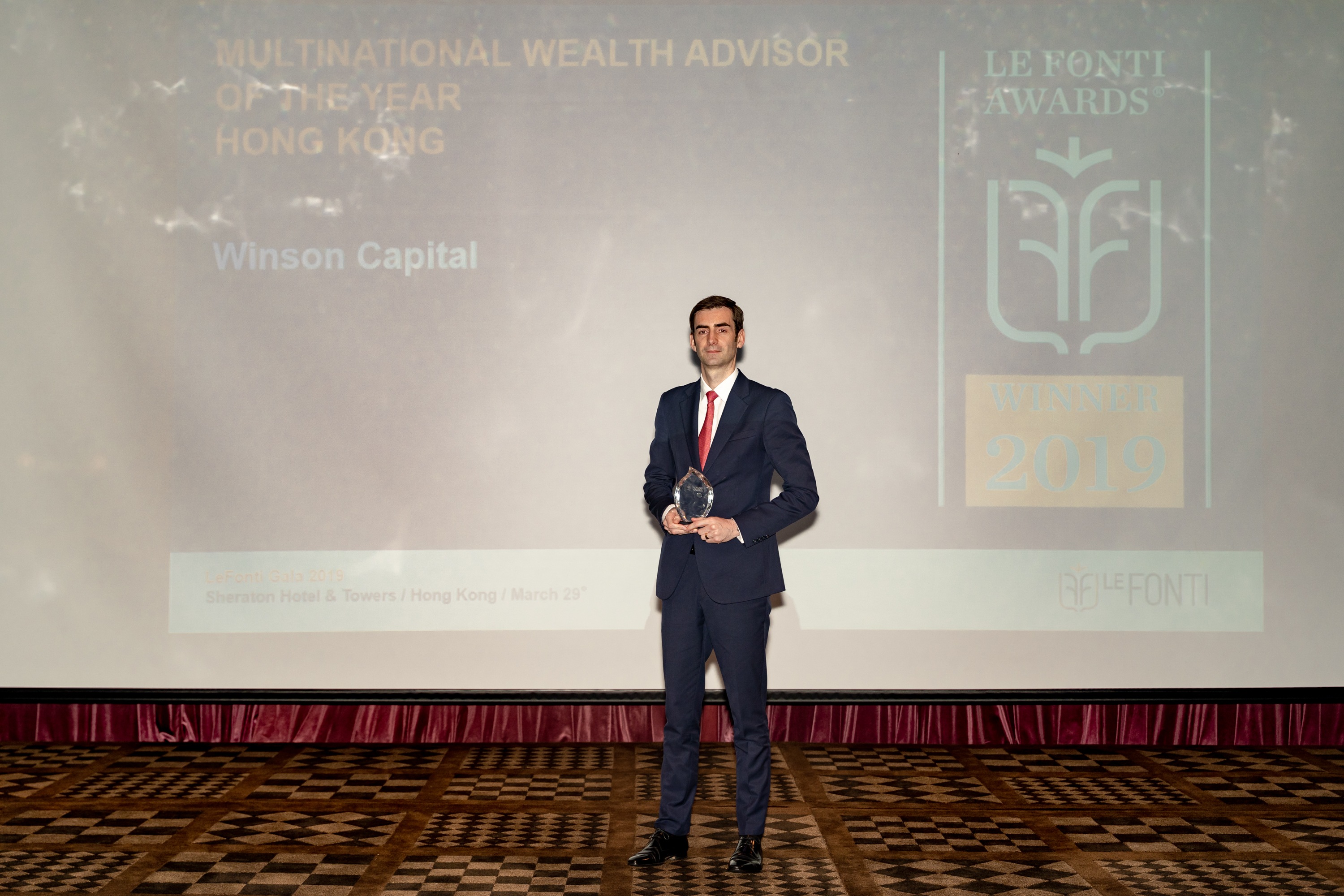
Awarded Multinational Wealth Manager 2019
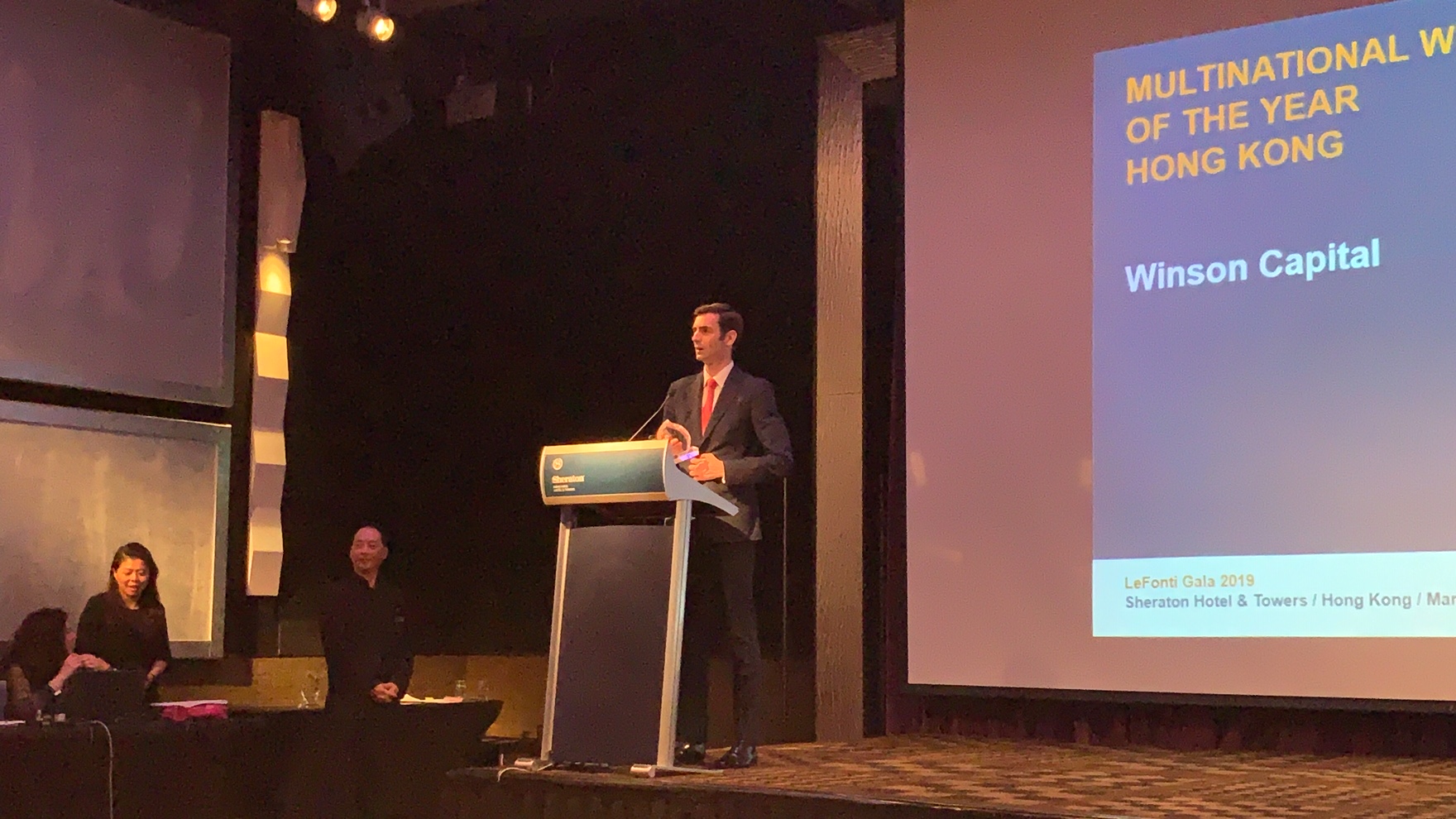
Due to hard work, dedication and passion, the ever-growing team at Winson Capital believe and live through these words. Not accounting for the profession an individual may be in, hard work and dedication to get the job done. As a result, doing everything with passion will eventually be successfully recognised. This can be said for your effort both in work and in life. Certainly, results speak for themselves with Winson Capital being awarded the ‘Best Multinational Wealth Manager 2019′ by Le Fonti AWARDS.
Introducing Le Fonti Awards
Le Fonti AWARDS is a live streaming ceremony recognising organisations that demonstrate corporate excellence in various fields. It has been recognised as one of the world’s leading ceremonies of business awards. Past winners in finance include companies such as Goldman Sachs, Deutsche Bank and UBS Global Asset Management to name a few.
The Awards Ceremony
The awards ceremony took place during the CEO Summit and Awards in Hong Kong at the Sheraton Hotel and Towers. The Friday evening, March 29th, was streamed live on television as awards were presented. Winson Capital’s Managing Director, David Reed, received the award on behalf of the company.
Words from the Managing Director
“It’s a great honour to collect this award on behalf of all the Winson Capital staff. We continue to set the standard for wealth management advice in Asia. Therefore, being recognised by Le Fonti for this is a great achievement.”
As a multinational awards winner, Winson Capital strives to continue providing a boutique-like service. Our aim is to enhance wealth management advisory using only the best practices, whilst remaining technologically advanced. Having the best employees, and possibly your future consultant, is what has established Winson Capital an our recognition for excellence.
We believe you can trust in us with your future wealth.
Contact one of our qualified advisers to find out how you could benefit from working with Winson Capital.
READ MORE
15 03 2019
Investment Seminar, Shanghai
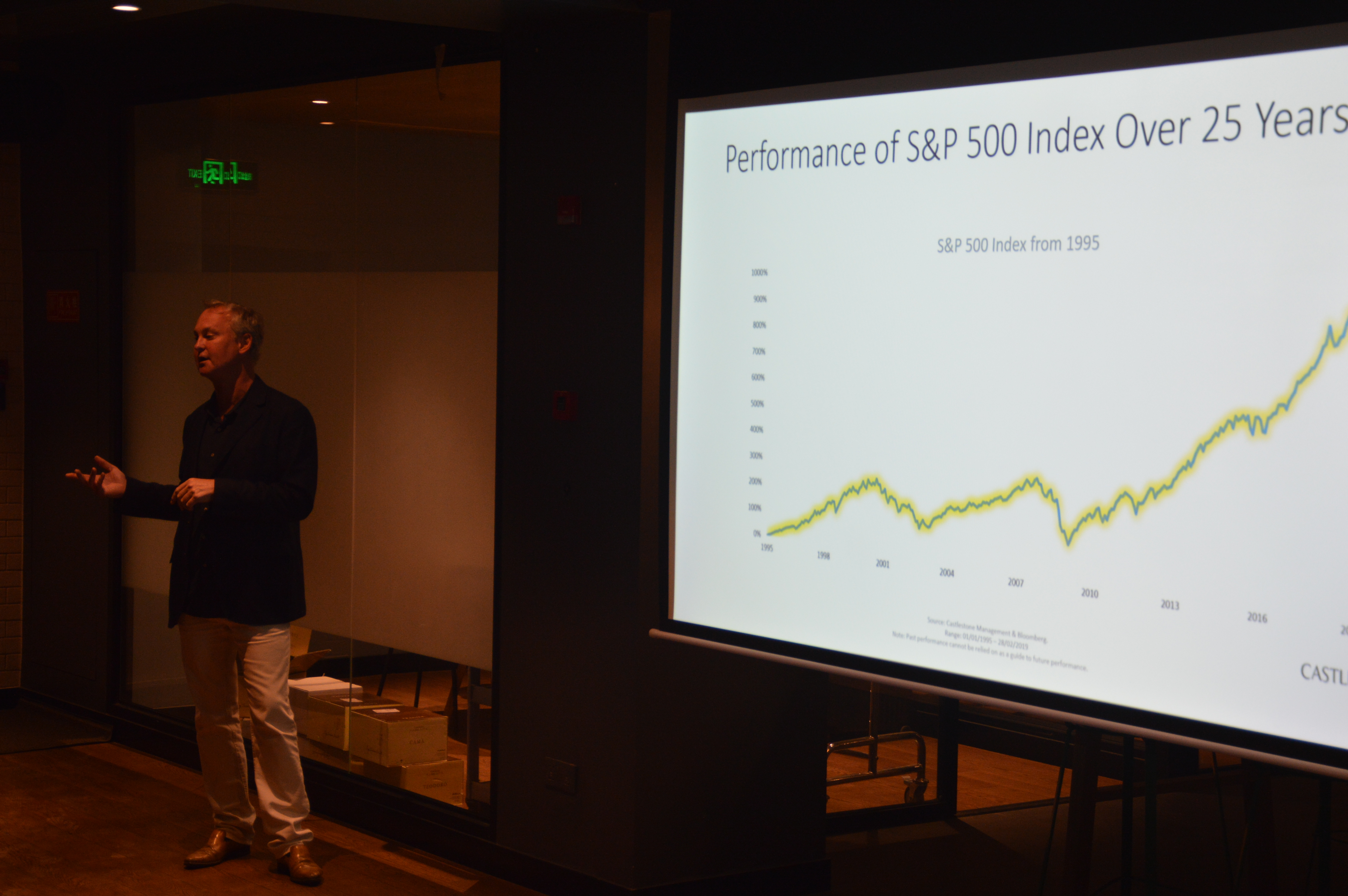
At Winson Capital, we understand the challenges of investing. As always, we aim to share our experience and knowledge with our clients to help them achieve their financial goals. Therefore, on Tuesday, March 12th we partnered with Castlestone Management to deliver a 2018 market roundup and a 2019 market outlook. The presentation by Castlestone was delivered by current CEO Angus Murray, who has a long history in finance. Having headed the International Equity Department of NatWest Markets USA, he resided as the President of Macquarie Bank USA.
Castlestone Management aims to deliver funds that are liquid, completely transparent, not using any leverage and only hold liquid instruments.

Standard & Poor’s 500 Composite Index
One of the topics covered during the presentation was the history of the Standard & Poor’s 500 Composite Index (S&P 500 Index). This included the performance of the past 25 years. He presented why focusing on long-term investment goals should be especially important during market downturns. As the below table shows, the market has tended to bounce back quickly during the past 10 recessions:
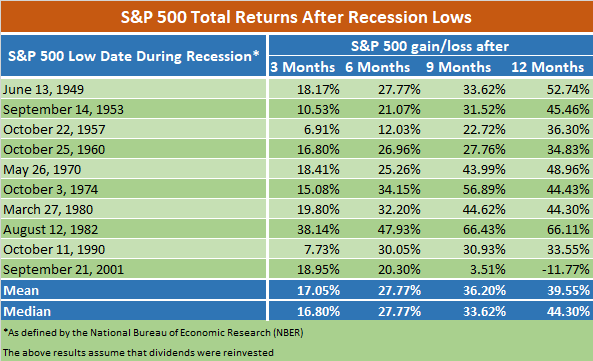
The index generated a 28% mean total return six months after bottoming and 40% a year later. The problem is, no one can predict a market bottom. But investors who maintained a long-term perspective and held on to their investments were able to participate when the market turned positive. As you will see, the S&P 500 rose 17% on average three months after recession low points. Those investors who continued to invest on a regular basis through the recession would have benefited from the subsequent recovery.
Passive vs Active Fund Investing
Passive vs Active fund investing was also discussed. These are the two main fund strategies that can be used to generate a return within investment accounts. Active fund management is the method in which fund managers proactively buy and sell stocks within a fund. This is done as an attempt to outperform a specific index. Passive funds are funds that replicate the performance of a specific index. Because this investment strategy is not proactive, management fees assessed on passive funds are often far lower than actively managed funds.

Professional Advice
The key message received by those that attended the event was to take professional advice. Essentially, this would aid in planning well for the future. There are key times during life when we all need access to capital, such as the funding of education for our children or funding our own retirement. By making sure you save when possible and make sensible investment decisions, you can ensure that reach these key times or financial goals. In other words, you will have the finances to support your hopes and dreams.
At Winson Capital, we help our clients invest and prepare for the future. We help to create financial plans to take you through life’s journey. To discover what we could do for you, get in touch to arrange a meeting with one of our consultants today.
READ MORE
22 02 2019
Managing Your Current and Future Finances With A Young Family
When you have a young family, you want them to have the best possible start to life. Therefore, this takes ensuring the best for their future. You do this by trying to provide financial security for them. The trouble is, it’s hard to know whether you’re making the right decisions in the long-run. This becomes a difficult stage, when you’re still trying to work out your own situation.
Before investing with us, one of our clients – Helen, a mum of three, had spent just over 10 years getting low returns from savings she had built up in high-street bank accounts.
Her time was being consumed with her work and raising a family. She didn’t have the time to start learning how to invest properly and manage her own investment portfolio. What she did know was that she needed to take control of her financial situation. Realising her situation, she chose to work with experts who can help her to manage her finances around her busy schedule.
Retirement Security
Helen works hard and saves harder to ensure that she has a secure financial future for her family which is, according to her, having a roof over their head when she retires. She also wants to help her children with their education. Finally, she hopes to get into the real estate market in the future.
Her dream is to retire at the same time as her husband, who is six years older than her. This is earlier than the state pension would usually support, but she hopes that she can devote more time to her family, especially after a long career. They want to be mortgage-free and be able to enjoy the full benefits of retirement.
Helen also wants to be able to travel to different parts of the world and see what the world has to offer, all of which can be attained through careful planning and sticking to her pension savings plan.
Utilise Employer Contributions
Helen has two pensions from her previous employer when she worked in the UK. She has a small defined benefit fund and a defined contribution scheme which her employer matched what she contributed. Her employer gives her the option to take a proportion of this as cash in retirement, but she is trying to maximise the possible benefits available to her. She states that it is money she hasn’t seen so she doesn’t think about it much.
As she is getting older, her pension becomes more and more important. She wants to know whether her retirement fund will be enough for the necessities and luxuries she desires and whether the two balance out. She knows there may be a gap between what she wants and what she has but is afraid if she doesn’t start additional planning, it may be too big.
Helen lists her children at the top of her current priorities. She would like to begin a personal savings plan for her retirement, but she is worried that this may adversely affect her current financial situation. These are common concerns we help our clients work through when helping to create our client’s financial plans to give them the future they desire.
After meeting with Helen and discussing her personal situation. We were able to help her set defined goals for her family and future retirement. These goals were then incorporated into a financial plan which we use to help her stay on track. She is now clear on her future and feels much more secure.
Managing the retirement income

Winson Capital has professional consultants who help explore all available options when it comes to saving for retirement. We will provide research when necessary and answer any questions you may have to help you to make informed decisions with regards to what is right for you and your financial goals.
We provide our clients with regulated and personal investment advice. Our goal is to match people with investment portfolios that are designed and managed by professionals to make sure they are in line with our client’s goals. We review investment plans with our clients on a quarterly basis and we’re always available when a client needs us. We aim to ensure that the financial goals our clients have for the future are met.
TRY WINSON CAPITAL FOR FREE
Simple, efficient and tailored to your profile. Winson Capital financial planning maximises your long-term returns whilst protecting your wealth.
Sign up to Winson Capital now: get access to your investor profile and discover the portfolio that is right for you, free of charge.
READ MORE
18 01 2019
How Dollar Cost Averaging Can Help Maximise Your Investment Returns
.jpg)
You’re looking to improve your financial situation, but recent volatility has made you question whether now is the right time to invest. 2018 began with increased volatility relative to years past after growing uncertainty on the global stage. Whilst volatility has calmed recently, both politically and financially, it is not a forgone conclusion that volatility won’t soon return. Having said this, it shouldn’t necessarily change the way you invest. To keep your long-term goals on track, it is best to increase diversification in your portfolios. Also, you should seek to take a more risk adjusted approach to investing, such as dollar cost averaging.
Timing the Market and Dollar Cost Averaging
The difficult, if not impossible, task with timing the market involves one’s ability to constantly monitor the movement of the financial markets. Secondly, having the skills to respond to volatility in an effective manner and have enough cash to cover trading costs.
Investors are left asking themselves two questions: How do we avoid the risks of negatively affecting our long-term goals? And what can we do to improve our odds of entering the markets at the best time? The answer to both questions is dollar cost averaging.
Dollar cost averaging is the strategy of spreading out your stock or fund purchases. The ability of buying at regular intervals, and in roughly equal amounts. This strategy avoids having to “time the market” which is an extremely difficult task for even the most sophisticated investor.
Therefore, this makes more sense when used over a long period of time with volatile investments, such as stocks, ETFs or mutual funds. It would make less sense for bonds or money market funds. These securities are available for purchase through regular savings plans, allowing investors to invest on a regular basis. At Winson Capital, the most popular monthly instalments into regular investment plans are $500, $850, and $1,500 per month.
Monthly Contribution Investment
To illustrate the strategy of dollar cost averaging, we have simulated the result of a monthly contribution investment approach. The table shows the comparison with a lump sum approach when making the same investment:
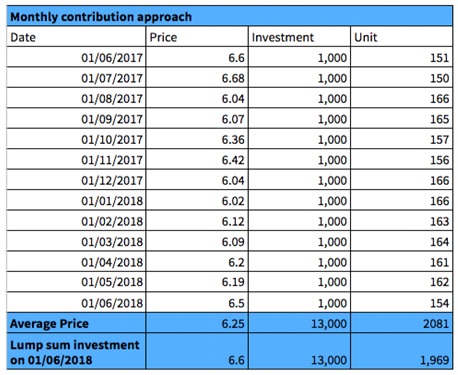
Let’s assume that an investor wanted to increase their exposure to the US equity market. He decides to invest $13,000 in a US stock ETF from June 2017. The investor can either invest the lump sum at the start of the period or choose to make monthly contributions in equal tranches at the start of each month. Over the next year, this should average out the purchasing cost.
By making monthly contributions whilst investing in a volatile and falling market, such as in the early start of 2018, the investor bought more shares at a lower price. He made purchases at $6.25 per share and bought 2,081 shares in total.
If the individual had invested the total amount at the start, they would have paid $6.60 per share and bought 1,969 shares in total. This is equivalent to a discount of 5.4% in price terms and will ultimately boost the performance of the portfolio when markets recover.
However, making regular investments over time in a rising market can also lead to a higher average cost of purchase compared to investing the lump sum at the start.
Build a Strong Portfolio
The fundamental way of constructing a sound portfolio is to consider your goals, risk tolerance and time horizon when deciding on which investments are the most appropriate for you.
With short-term goals, the main priority will be protecting the value of your money whilst for long-term goals, such as retirement, your main priority will be seeing growth within your portfolio.
Building a sound portfolio is a time-consuming process that involves many factors. Here at Winson Capital, we are committed to providing cost-effective investment advice to all our investors. We will take the time to understand your needs to create a portfolio that is best suited for you. Your portfolio will be managed by us throughout your investment time with us . The decision you must make is how much and how frequently you would like to invest.
By choosing dollar cost averaging, you can avoid the cost of committing to a higher sum of money at the beginning of your investment period. Instead, you can build a sound portfolio by investing little and often. Establishing a disciplined and regular investment pattern is a great habit for any saver at any time. When it comes to investing, “slow and steady” wins the race.
TRY WINSON CAPITAL FOR FREE
Simple, efficient and tailored to your profile. Winson Capital financial planning maximises your long-term returns whilst protecting your wealth.
Sign up to Winson Capital now: get access to your investor profile and discover the portfolio that is right for you, free of charge.
READ MORE
17 12 2018
Five Personal Finance Questions You Should Know The Answer To

The vast majority of us make financial based decisions every day, sometimes without even realising it. From simple decisions such as budgeting a weekly shopping trip, to more time consuming and potentially complicated decisions such as car insurance or what mortgage provider is best for you. At some point in our lives, we also need to decide what type future we want when we finish working and what type of pension will we need to help us plan for this. Some decisions are easier made than others, but unless action is taken, we can lose track of our finances. Other major financial decisions, such as pension planning, may get finalised too late.
The Digital Age
In today’s digital world, information is freely available. But the ability to understand some of the financial terms and jargon that is being used can become increasingly difficult. This has been said to affect the economy due to the struggle to make well-educated financial decisions. Thus, costing the UK economy as much as £20 billion a year.
The lack of financial knowledge and confidence to utilise your personal finances can effectively lead to an ill-informed decision. As a result, these could end up costing you more, as the UK intends to bring interest rates from the current all-time low to a more “normal” rate.
Research shows from the charity organisation, National Numeracy, around 17 million of the UK adult population has the math’s level comparable to that of a primary school student. Meaning that tasks such as calculating change from a shopping trip are often done wrong.
Not being able to do simple tasks knocks the confidence and the will to do the tougher tasks. These tougher tasks include being able to effectively compare various bank accounts in order to get the best outcome for yourself. Therefore, you could be delaying the possibility of reaching their financial goals by not fully understanding the best routes to get there.
Financial Education and Personal Finance
There isn’t a fast-track lane to fix the lack of financial knowledge and confidence for the public. Not one that can be traced back to the lack of financial education in the school syllabus.
The government and schools are being asked to work together to modify the way subjects such as Maths and Personal Finance are taught in school – in order to create a more sustainable environment for future generations.
The ability to allow the British public to understand key concepts such as Inflation, Compounding and Diversification will allow us to make better informed decisions. This could help people avoid falling into debt or even problems regarding making payments of a mortgage.
The Responsibility of The Financial Industry
The financial industry also has the responsibility to make their fees and costs to customers fair and more transparent. At Winson Capital, transparency is the cornerstone of our business. We believe in working hard to ensure you know your investment charges and risks involved.
When you make an investment, your money is at risk. Therefore, there is the need to ensure that you will have financial security for all your needs. Although the financial markets can be complicated, we believe that there are five key topics that people should be able to answer questions about:

1. What Is “Inflation”?
Inflation is the rate at which the general level of prices for goods and services is rising and, consequently, the purchasing power of currency is falling. It’s an economics term that means you must spend more to fill your gas tank, buy a gallon of milk, or get a haircut. Inflation increases your cost of living.
Imagine if you invested £1,000 in a bond with 10% return a year ago. Now you are going to collect the £1,100 owed to you. Is that £100 (10%) return the same value as it was a year ago? No. If we assume that the inflation was positive for the year, the value of your money has fallen, as well as your real return. If the inflation percentage was 4%, then your net return is in fact 6%.
If you are putting your money into a cash savings account, you will have to try and find the one that will have a return that beats the rate of inflation. This is to ensure that you can purchase the same amount of goods and services now, as you would be able to a year ago.
2. What Are “Interest Rates”?
Interest rates are the amount that you will either earn or pay on the original sum that you have either invested or borrowed.
When putting money into a bank account, banks tend to offer interest on that amount in order to keep your money in for as long as possible. This means that you will often see that you have more money in your account than you put in over time.
On the other hand, the words interest rate and loan also go hand in hand. When you take out a loan, you are expected to pay interest (money on-top) on this loan. Common examples include – mortgages, credit cards and even student loans.
The Annual Percentage Rate of Charge (APR) is essentially the cost of borrowing and includes both the cost of borrowing and any other costs automatically included.
3. What is Your “Financial Situation”?
Having trouble believing your financial goals can be a reality? Maybe it is time you took a step back and did an assessment of personal finance goals. This is a great way to refresh your goals and get yourself motivated to stay on track. There are four key ways you can assess your financial situation:
1. Do you have a low amount of debt relative to your income?
2. Are your savings enough to cover an unexpected expense or emergency?
3. Are you on track with your retirement contributions?
4. Do you regularly contribute to your personal savings?
4. What Do We Mean By “Diversification”?
When deciding on where to put your money, it’s best for you to consider “not putting all your eggs in one basket”. Diversification is the process of allocating capital in a way that reduces exposure to one particular investment or risk. The idea behind this is to have a portfolio constructed of different kinds of investments. On average, you can yield higher returns and pose a lower risk than any individual investment found within the portfolio.
5. What Is “Compounding”?
Compounding is the process in which the earnings from an asset, either the increase in value of the asset or from interest, are then reinvested in order to generate more earnings.
If you have £1,000 and earn 10% interest per year, how would you calculate the interest in the second year using compound interest?
Year 1 = £1,000 x 0.10 = £100
Year 2 = (£1,000 + £100) x 0.10 = £110
As you can see, from the initial investment of £1,000, we gained a £100 from interest in the first year. Then the following year we reinvested both the initial investment and the money earnt from interest. Meaning that we were able to increase the amount that we were investing and earning.
Compounding allows you to earn interest on your interest.
MATCH WITH A PORTFOLIO AND START INVESTING TODAY
Simple, efficient and low cost, Winson Capital helps you protect and grow your money over time.
Sign up with Winson Capital today to match with an investment portfolio that’s built and managed to help you achieve your financial goals. Make your money work harder for you, without breaking a sweat.
If you’d like to brush up on your financial literacy skills, here are some good resources:
* National Numeracy https://www.nationalnumeracy.org.uk/
* EconoME, Bank of England https://www.bankofengland.co.uk/education/econome
READ MORE
29 11 2018
What Is A Fund?
As an investor, you want your money to grow for you and your family’s future. But it can sometimes be difficult to have confidence in your investment. Therefore, making decisions can be difficult when you don’t have the time to master the financial markets by yourself.
Instead, a fund can help take some of the pressure off investors. In turn, providing them with a diversified portfolio that’s built and managed by a team of experts.

What is an investment fund?
A fund is an investment vehicle that allows you to pool your money together with other investors. In order to invest in a range of different assets. The fund will aim to grow in value or provide you with a regular income.
It’s not up to individual investors to decide the fund’s strategy, set out the asset allocation or pick the investments. This responsibility falls to the fund manager. By investing in a fund, investors hope to get access to a diverse range of assets, greater investment expertise. As a result, offering lower trading fees than if they did it alone.
Diversification is a way of managing risk in your investment portfolio. By spreading your money across investments, asset classes and geographies, you hope to offset any losses with gains made elsewhere.
Funds have different strategies and objectives. Whether it’s to provide income or increase the value of your money invested. For instance, if you want to invest in a passive or active fund, or focus on a specific investment, sector, country or asset class.

Different types of funds
Funds have been around for many years and have evolved into many different guises. Today, different types of investment funds include exchange traded funds, mutual funds, and hedge funds.
A mutual fund is an open-end fund, which means it has no limit to how many people can invest in it. When investors add money to the fund, new shares are created; when investors withdraw their money, shares are retired.
Closed-end funds act more like shares on the stock market, with a fixed number of units that can be traded. These funds, like investment trusts, are mostly actively-managed and the shares can be traded in seconds. This means they offer more flexibility and transparency than mutual funds.

Active vs Passive
When it comes to investing in funds, the active versus passive debate takes centre-fold.
By making an investment, your capital is at risk.
It’s important to understand exactly what you want from your investment to make sure it matches what you’re investing in – otherwise this can really impact your returns.
Investors who want to outperform the general market will put their money in an actively managed fund. The fund manager’s team will analyse the markets for you and invest in the assets it thinks will help the fund grow in value.
This comes at a price, however, and the management fees often associated with actively managed funds can eat into investor returns.
Passive investments are an alternative to actively traded funds. These funds aim to track and replicate the returns of an index, specific commodity bond, or basket of assets.
Passive investments still offer diverse expose to a range of assets, but because they aim to replicate the returns of a market and take little fund managment, they generally have cheaper management fees.

What is an ETF?
With the industry feeling the heat from margin pressures, increased regulation and competition, passive investments like exchange traded funds (ETFs) have surged in popularity. Global ETF assets had reached $5.66 trillion (£4.33 trillion) by the end of August, numbers from the industry data provider ETFGI show.
ETFs are a low-cost, simple and transparent alternative to actively managed funds. They are similar to a closed-end fund, but are passive investments, can create and redeem shares, offer more transparency, generally don’t use leverage – unless specified – and are lower-cost.

The right investment for you
Finding the right fund for you takes time, experience, knowledge and skill. To make sure you’re on the right track to reach your financial goals, your investments need to reflect your investor profile and attitude to risk.
It’s not easy to understand your investor profile, either – it depends on what you’re investing for, your time horizon, attitude to risk and financial history. There are funds out there designed to help you reach your goals, you just need to find them.
At Winson Capital we match you to an investor profile and investment portfolio. This investment portfolio is specifically built and managed in line with your investor profile to help you get one step closer to your financial goals.
MATCH WITH A PORTFOLIO AND START INVESTING TODAY
Simple, efficient and low cost, Winson Capital helps you protect and grow your money over time.
Sign up with Winson Capital today to match with an investment portfolio that’s built and managed to help you achieve your financial goals.
Make your money work harder for you, without breaking a sweat.
Get started
[Sassy_Social_Share title=”Share”]
READ MORE
14 11 2018
China’s New IIT Reform Seminar
On November 13th, Winson Capital partnered with PwC Shanghai to hold a seminar regarding the changes with the Individual Income Tax Laws (IIT) in China. The seminar was very well received, and we have had some fantastic feedback from those that attended. The seminar was followed up with a chance to network with a glass of amazing Italian wine and a great buffet.
PwC Shanghai
PwC is one of the world’s leading accountancy and tax advisory companies and we were confident that by partnering with them, they would help to give a deeper insight into the new IIT law changes and of course answer any questions that arose. If you didn’t get the chance to join us, below is a summary of the changes;
Among the key changes introduced in the recently passed IIT law is the determination of tax residency in China. The new law is set to reform IIT in the country, for both Chinese Nationals and foreign residents in China.

Tax Resident in China
Implemented on January 1, 2019, an individual who resides in China for 183-days or more will be considered a tax resident. Additionally, these individuals will be liable to PRC (People’s Republic of China) IIT on their global income.
This stipulation will replace the previous ‘five-year-rule‘, under which a foreign individual was subject to Chinese taxation on worldwide income. However, considering that they have lived in China for more than five years.
The previous five-year threshold was easily circumvented by expatriates who would choose to leave the country for 91 days per year. This individual would then have 31 consecutive days to ‘reset the clock’ on the five-year threshold.
An important note is that in the public opinion this ‘five-year rule’ will be kept but it has not yet been confirmed.
The new IIT law is set to ease the tax burden for low to mid-income earners. Due to the cost of living in China increasing in recent years, a tougher stance on both foreign workers and high-income earners has been taken.
Expanded Tax Deductions
This is also done through expanded tax deductions – including for children and the elderly – which come at a time when China’s population is rapidly aging, and the government is encouraging families to have more children.
The State Council also announced RMB 45 billion (US$6.59 billion) worth of tax cuts, a day before the IIT law passed. Both the tax cut and the IIT reform aim to boost the economy amid China’s escalating trade war with the US and signs of a slowing economy.
On October 1, 2018 the new tax brackets and standard deduction amounts have taken effect, while on January 1, 2019 the remainder of the new personal income tax laws will come into force.
Beginning October 1, 2018, the standard deduction on comprehensive income has increased from RMB 3,500 (US$512.1) for resident taxpayers and RMB 4,800 (US $702.3) for non-resident taxpayers to a unified RMB 5,000 (US$731.6) per month.
This will raise the annual threshold to RMB 60,000 per year, which is equivalent to an extra annual deduction of approximately US$ 8,779.2 per year.
The new IIT law also provides a new category of ‘special additional deductions’.

Resident Taxpayers
Resident taxpayers will now be able to deduct the following additional items from their comprehensive income under a revised Article 6:
- Education expenses for children;
- Expenses for further self-education;
- Healthcare costs for serious illness;
- Housing loan interest;
- Housing rent; and
- Support for the elderly (added in the final draft).
Charity deduction is also now deductible.
The new IIT law now provides discount incentives for certain categories of income. Income derived from labor services, author’s remuneration, and royalties are to be calculated with a 20 percent discount. This will be before forming part of the monthly ‘pre-tax income’.
In addition to this, author’s remuneration will be subject to a further 30 percent discount. Directly to be applied on the monthly pre-tax income.
Defining the Tax Brackets
For comprehensive income: the lower tax brackets have been expanded. This means that they are now applied on a wider range of income levels, while the higher tax brackets remain the same.
The categories of ‘income’ subject to IIT have now been simplified and amended. Now, a 3-45 percent progressive tax rate applies to income derived from labor services, author’s remuneration, and royalties.
In effect, traditionally taxed at a flat rate of 20 percent, individuals are now taxed at progressive rates.
The IIT reform marks a significant change to China’s taxation policies. With the introduction of the new IIT law, low- and mid-income earners enjoy greater tax relief. Subsequently, individual taxpayers of all stripes benefit from a broader range or deductibles.
At the same time, foreign workers may be taxed with greater scrutiny. And tax authorities have been given greater capabilities to enforce rules and expand tax collection.
For more information, contact Winson Capital to arrange a meeting with one of our consultants.

05 11 2018
Compound Interest Explained

What is Compound Interest?
Arguably, one of the most powerful forces in the financial markets is compound interest. Albert Einstein called it the eighth wonder of the world. It helps to maximise your returns therefore helping you to reach your goals quicker than simple interest alone. Compound interest explained:
When calculating interest on a loan, savings account or investment, there are two types of interest; simple or compound.
Simple interest is the easiest to calculate but in reality, it’s rarely used. It is charged on the principle amount only and ignores any increase or decrease in value over time. For example, if you invested £1,000 and you earned 2% interest per annum, you’ll get £20 every year it’s invested. Compound interest however is very different.
Interest Earned on Interest
Compound interest is charged on the principal amount plus any increase or decrease in value over time. It’s defined as the interest that is earned on interest. It’s the result of reinvesting interest instead of paying it out like simple interest does. So, the interest earned this year is added to the principal and interest earned form the year before. For example, if you invested £1,000 and you earned 2% interest per annum, you’ll get £20 in the first year. On the second year, you’ll get 2% of £1,020 increasing your investment to £1,040.40. On the third year, you’ll get 2% of £1,040.40 and so on.
Compound interest helps a sum grow faster than by just interest itself, and can maximise your returns, especially with larger values and over a longer time-horizon.
The Frequency of Compounding
In reality, compounding occurs more frequently than once a year. Popular compounding intervals are daily, monthly and quarterly. The rate in which compound interest grows really depends on how often the compounding occurs. In theory, the higher the number of compounding periods, the quicker compound interest will grow.
For example, if you invested £100,000 into an investment that pays 2% per annum once a year – after 12 months you’ll have £102,000. However, if the investment paid 1% semi-annually you would have £102,010. The first interest payment would be 1% on £100,000 increasing your investment to £101,000. The second payment would be 1% of £101,000, increasing your investment to £102,010, making your total return for the year £2,010.
Impact of Compound Interest
To emphasise the impact compound interest could have on your savings, if I offered you £500,000 right now or 1p today that doubled everyday for 30 days, which would you chose. Whilst most people would think you were crazy if you chose not to accept the £500,000 now, it would certainly be the right choice. If you chose 1p that doubled everyday for 30 days, you would get back over £5.36 million.
Of course, this is certainly not reflective of the returns you could see by investing in the financial markets, but it helps to highlight the power of compounding. The more money you have invested and the more frequent the compounding periods, the quicker your investment will grow.
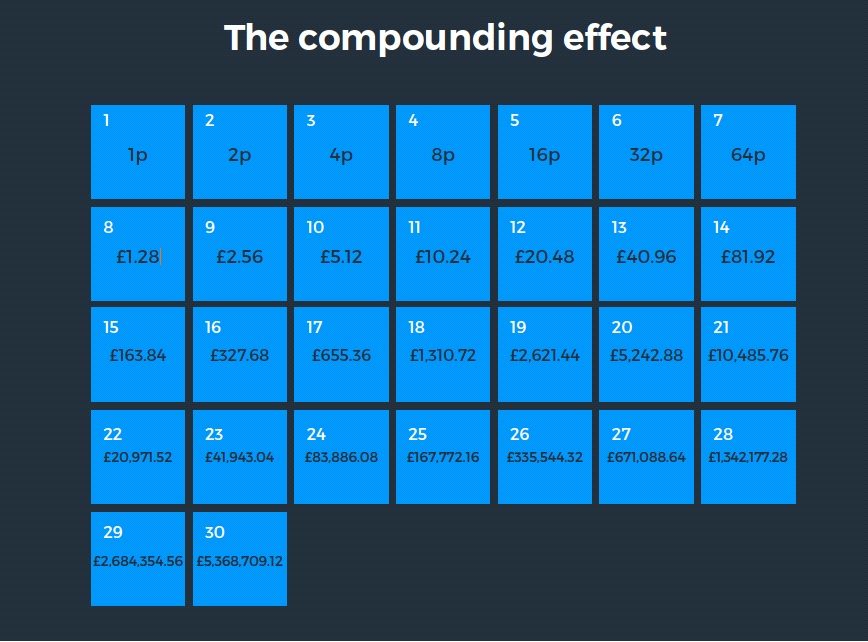
From the table above, you can notice that progress is slow at the start. It takes 15 days to get from 1p to over £160, but only 15 days after that to get to £5.4 million. The more money you can keep in the markets instead of paying unnecessarily expensive fees, the better your return is.
How to Calculate Compound Interest
To calculate the impact of compound interest, you will need to use the following formula:
A = P[(1+i)n-1]
• A = Amount
• P = Principal,
• i = nominal annual interest rate
• n = number of compounding periods
To understand how this works, imagine you took out a mortgage to buy a new property. You borrowed £100,000 and chose to pay it back over 20 years. The interest on the mortgage was 3% that compounded annually.
To work out the interest you would need to pay back, the calculation would look as follows:
£100,000 [(1+0.03)20–1] = £100,000 [0.80611]
The interest you will pay is £80,611
Due to the impact of compounding, the effective rate of interest on your mortgage would actually be 8.06% per annum over the 20-year period compared to the initial 3%.
Now imagine that you take out the same mortgage over the same 20-year time frame but the interest was compounded semi-annually instead of annually. Because the interest is paid twice a year, the 3% is divided twice and paid every 6 months increasing the compounding periods to 40. In this scenario, the amount of interest you would need to pay increases from £80,611 to £81,401.84 as shown above. This also increases the effective rate of compound to 8.14% per annum.
Compounding Periods
This highlights the amount you pay in interest or earn as a return when you invest, can rise due to an increase in the number of compounding periods. The reality is, taking advantage of compounding interest could mean you reach your financial goals much quicker. It really could make the difference to help you retire early.
Saving on a regular basis will help you to take advantage of compounding interest, Winson Capital financial consultants can help you to find a suitable savings plan to do this. Please feel free to get in touch. Our advice is simple, efficient and tailored to your needs. We can help you to set up an investment plan that maximises your long-term returns whilst protecting your wealth.
READ MORE
15 10 2018
How Do I Save for the Future Whilst Enjoying Life Now?

Our financial planners often work with younger clients and one of the main conflicts we see is their desire to save for the future. In conjunction with the impulse to live for present day, enjoying their earnings now. People understand that tomorrow is promised to no man, but they also don’t want to live their retirement years with limited choices.
The question we get asked most often is: How can a successful balance between these seemingly competing desires be struck? Drawing on our experience of financial planning for the thousands of people we’ve helped, here is a word of advice:
Cash Flow
The ability to understand your cash flow is extremely important when planning for your future. If you want to save money for the future, you need to fully understand your current spending habits. We recommend making a list of everything you spend money on each week. There are great apps on smartphones that will help you do this. Review your weekly spending at the end of each week and this will help you plan for the coming week. It’s much easier to identify times during the week when you may have overspent more than you planned. Then adjust for the coming week. It’s much easier to live lean for a week if you’ve overspent the week before and much harder to catch up if you’ve overspent for the month. So in our opinion, weekly tracking is very important.
Say ‘No’ By Deciding What Your ‘Yes’ Is
The clearer you are regarding your short and long term goals, the easier it is to make spending choices you will be happy with. Knowing your future goals helps you to prioritise your spending habits today, making any changes to your current spending where necessary. For example, one of our clients stated that when she was younger, if she didn’t go out every weekend with her friends – she felt somewhat deprived. It wasn’t until she began planning to buy her first property that she discovered this is what she really wanted. Once that became the big ‘yes’, she felt that she wasn’t really depriving herself of what she really wanted by not going out. This single idea of being a property owner helped her to change her spending habits entirely and save up enough money for a deposit to buy one.
Limit Your Fixed Costs
Having a cash management system in place will help with your future planning. We like our clients to think of their money using a three pot system – Yesterday’s Pot, Today’s Pot and Tomorrows Pot.
Yesterday’s pot is all of the money you have agreed to spend at the start of the month such as: rent, utilities, insurances, gym membership, etc. Whilst buying a new car on finance might not seem like a big deal if you think you can afford it, adding a loan to your ‘yesterdays pot’ can come with a huge trade off; it limits your daily spending (today’s pot) and reduces your ability to save for your future (tomorrows pot). We regularly see couples who add too much to their ‘yesterdays pot’ limiting their present and future choices. Make smart choices now and you can build the future you want.
Get Your Savings Automated

Nowadays, pretty much everyone gets paid by direct transfers into their bank accounts. Hence, it’s easy to direct some of these funds into multiple accounts. This can be set up so it happens automatically each month. Beyond your basic emergency fund, we’ve seen a lot of our clients have great success by setting up multiple accounts. This enables their balances to grow for specific goals. This allows our clients to see their specific progress over time. This same concept also applies to retirement plans at work. If you can save that money automatically before you have the chance to spend it, you’re far more likely to continue saving long term. You will likely increase the amount you’re saving in the future as your salary increases with time.
Spontaneity Needs To Be Planned For Too
On the contrary, we believe that planning for spontaneous spending is also essential. Many people we’ve spoken to resist tracking their spending and resist saving for the future because it feels too constraining. A possible solution for this is to build in to your budget money that is used purely for spending spontaneously. Knowing that you have money in your budget that’s there for the sole purpose of spending it, it will help to protect the money you have other accounts. This secures your future by providing an outlet for spending on spur-of-the moment decisions.
READ MORE
23 09 2018
Shanghai Expat Show 2018

Time of The Year
September 18 – 21st was that time of the year again for the annual Shanghai Expat Show, inclusive of financial services. In turn, the show brings together expats from Shanghai and beyond. These influential entrepreneurs and like-minded individuals gather at the Shanghai Exhibition Center in Jing’an, Shanghai. This year was the 12th year for the Expat Show and as always, Winson Capital made an appearance.

What The Opportunity Provides
The weekend long event gives attendees the opportunity to see what services and products the city has to offer. Thus, giving reason to why Shanghai is a fantastic place to reside as an expatriate. The weekend also gives companies the chance to showcase their products and services. This year included an interesting mix of workshops, a range of different service providers, games, competitions, gifts, and more.

Winson Capital and The Expat Show
Winson Capital has been supporting the Expat show for several years because we feel it’s extremely important that people understand what financial services are on offer in China. This year was no different and was especially important for us because it was our first event following our re-branding from Oscar Winson to Winson Capital in early September. If you came to the show, you probably saw us. Once again, we were well received once and welcomed many people into our stand to have a chat and learn more about us and our services. Many meetings have been organised for the next few weeks and we expect most will become clients.

We also held a great competition to win prizes from bottles of Champagne to a weekend for 2 in Sanya. The draw will be made on October 25th so please look out on our WeChat account for the announcement of the winners.

If you didn’t manage to make it to this year’s event, we will likely be there again next year. To find out more about the services we offer, please get in touch and one of our financial consultants will be in touch to arrange an introductory meeting.

17 09 2018
Financial Planning Basics

Financial planning covers a wide variety of topics including budgeting, expenses, debt, saving, retirement and insurance among others. Understanding how each of these topics work together and affect each other is important for laying the groundwork. This is especially needed for a solid financial foundation for you and your family. Talking to a professional who can help you build a financial plan encompasses all of the above and more. We will ensure that you are on the road to financial success.
Budgeting
The basic level of personal finance is dealing with a budget; you make money, then you spend it. Even if you haven’t created a detailed and written budget, you continue to budget on a daily basis. When you are faced with spending money on something, you first think about it. Thereafter you realise that by spending that money, you will not be able to spend on something else.
When you create a budget, you begin to see a clear picture of how much money you have. This will depict what you spend it on, and how much, if any, is left over. When you can clearly see where your money is going, you can then budget appropriately so that your money is going where it should be going.
Cutting Expenses

After you have successfully created a budget, you’ll have a much better understanding of where your money goes and where you can possibly ‘trim expenses’. For many people, this is as simple as cutting back on some of the little things that can add up.
Getting Out of Debt
Even after creating a sound budget and cutting unnecessary expenses, you may still find yourself with lingering debt to get rid of. Using credit and taking on some debt itself isn’t necessarily a bad thing, but when you can’t keep up with the payments or borrow more than you can afford to pay back, you could be in trouble.
One of the most important steps in getting out of debt is to pay more than the minimum amount due each month. Even a modest credit card balance can take over a decade to pay off if you simply pay the minimum amount due. In addition, paying the minimum will end up costing you thousands in interest over that period.
Saving for Retirement
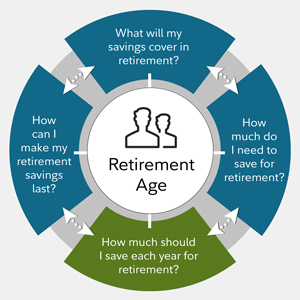
With fewer employers now offering full pension plans, it has become more important than ever to save and plan for your own retirement. Unfortunately, many people feel that they simply don’t have enough money left over each month to save.
Retirement savings must become a priority instead of an afterthought. There are numerous international retirement plans that work tax efficiently helping you to avoid tax on the growth. Also with an international retirement plan, you have a large amount of flexibility. After all, we never know what life is going to throw at us and so having a flexible retirement plan will allow you to manage the plan as your life changes.
Insurance
You’ve created a budget, cut expenses, eliminated your credit card debt and, have started saving for retirement, so you are all set, right? While you’ve definitely come a long way, there is one more important aspect of your finances that you need to consider.
You’ve worked hard to build a solid financial footing for you and your family, so it needs to be protected. Accidents and disasters can and do happen and if you aren’t adequately insured, it could leave you in financial ruin. You need insurance to protect your life, your ability to earn income, and to keep a roof over your head.
Learn how Winson Capital can help you create a solid financial foundation
READ MORE